The Linchetto
the elf of the Lucca area · Tuscany
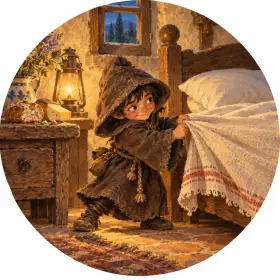
The Linchetto is the house elf of the province of Lucca. He is not bad, but at night he cannot keep still: he pulls the blankets off sleepers, knocks on doors, moves things around and makes strange noises in the kitchen. In the stables he enjoys tying the tails of cows and horses together. His looks change from story to story: sometimes a tiny little man, sometimes an odd little animal. To keep him away, people hung a sprig of juniper behind the door: he stops to count its leaves.
Did you know? One trick to keep him busy was to leave a cup of rice on the bedside table: the Linchetto cannot resist, tips it over and starts counting the grains.
Sources: MilanoFree, «Personaggi del folclore italiano: Mommotti, Linchetto e Anfisbena»; Giovanni Giannini, raccolte di novelle e tradizioni lucchesi (fine Ottocento)
The Buffardello
from “buffo”, a puff of wind · Tuscany
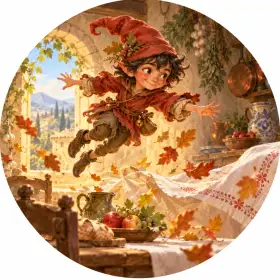
The Buffardello is a red-dressed elf of Garfagnana and Lunigiana, and he arrives with the wind. He comes in through the windows with the gusts, messes everything up, knocks things over and gets up to mischief in the house and in the stable. At night he sits on the chest of a sleeper and makes them feel terribly heavy. In local tales he can also look like an animal, for example a fox. In Garfagnana people still mention him, playfully, to give children a little fright.
Did you know? In Garfagnana, when a strong wind suddenly gets up, some say the Buffardello is passing by.
Sources: Toscana Ovunque Bella, «Camporgiano»; MilanoFree, «Scopriamo alcuni folletti che popolano i nostri boschi»
The Legend of Pia de' Tolomei
“Siena made me, Maremma undid me” · Tuscany
In Purgatory, Dante meets a gentle soul who asks only to be remembered: it is Pia, a noblewoman of Siena. In a few lines she says she was born in Siena and lost her life in the Maremma. Tradition says she was the wife of Nello, lord of Castel di Pietra, and that he, out of jealousy or to marry another woman, had her killed. Who Pia really was, scholars do not know for sure: over the centuries her story was filled in by commentators and poets.
Did you know? Dante gives Pia only seven lines, yet they are among the most famous in the whole Divine Comedy.
Sources: Dante Alighieri, «Purgatorio», canto V, versi 130-136; Toscana Promozione Turistica, visittuscany.com, «Castel di Pietra»
The Sword in the Stone of San Galgano
the sword of Galgano Guidotti · Tuscany
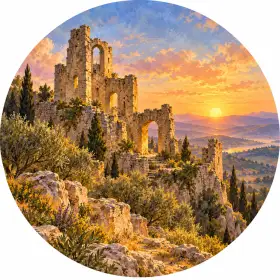
Galgano Guidotti was a young knight from Chiusdino, dissolute and overbearing. Tradition says that after a vision he decided to change his life: on the hill of Montesiepi he thrust his sword into a rock to make a cross of it and say goodbye to war. He lived as a hermit for about a year and died in 1181; after his death he was proclaimed a saint. The incredible thing is that the sword is still there, inside a round chapel, protected by a glass case. A little further down are the ruins of the abbey of San Galgano, which no longer has a roof.
Did you know? Some have linked this sword to King Arthur's, but it is only a theory: the two stories may have nothing in common.
Sources: Finestre sull'Arte, «San Galgano e la Spada nella Roccia: storia dell'Eremo di Montesiepi»; Avvenire, «La spada nella roccia? È in Toscana a San Galgano»
The Ponte del Diavolo of Borgo a Mozzano
the Devil's Bridge, also called Ponte della Maddalena · Tuscany
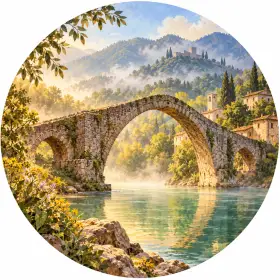
Over the river Serchio stands a strange medieval bridge, with a very high, lopsided arch: the Ponte della Maddalena, better known as the Ponte del Diavolo (the Devil's Bridge). The legend says the master builder could not finish it and made a pact with the devil: the bridge would be ready in one night, in exchange for the first soul to cross it. Full of regret, the builder asked the parish priest for help, and in the morning they sent an animal across first. Tricked and furious, the devil threw himself into the river and vanished. The bridge, on the other hand, is still there.
Did you know? The bridge is more than 90 metres long and has a “donkey's back” shape, with a big central arch and three smaller arches, all different from one another.
Sources: FAI, I Luoghi del Cuore, «Ponte della Maddalena detto del Diavolo»; Toscana Promozione Turistica, visittuscany.com, «Il Ponte del Diavolo»