The Apennine Sibyl
the Sibyl Queen of the mountains · Marche
Near the top of Mount Sibilla, more than two thousand metres high, there is a cave. Tradition says that beneath it lived a Sibyl, a prophetess and sorceress, queen of a hidden kingdom full of wonders. In the Middle Ages knights and curious travellers climbed up there to get in, but whoever went in, according to the hermits of the “Guerrin Meschino”, never came out. A chivalric romance, “Guerrin Meschino”, tells of a hero who lived a year in her kingdom to find out who his parents were, but the Sibyl did not tell him.
Did you know? In 1420 a French traveller, Antoine de la Sale, climbed to the cave and wrote down what he saw: it is one of the first mountain travel accounts.
Sources: Antoine de la Sale, «Le paradis de la reine Sibylle» (1420); Andrea da Barberino, «Il Guerrin Meschino» (XV secolo); Montagna.tv, «Sibilla e Priora, le regine dei Monti Sibillini»
La Befana
from “Epifania”, the feast of 6 January · Marche
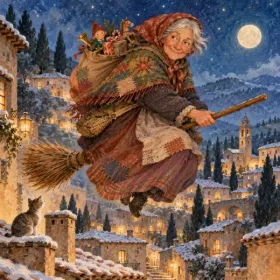
An old woman on a broomstick who, on the night between 5 and 6 January, brings sweets to good children and coal to naughty ones. A legend says the Three Wise Men asked her the way to Bethlehem and invited her to follow them; she refused, then regretted it, and since then she has been looking for the Child from house to house, leaving a present for everyone. Scholars also find older roots, in the farming rites of late winter. La Befana belongs to all of Italy, but Urbania, in the Marche, has declared itself her town.
Did you know? In Urbania la Befana has a house in the old town and even a post office, where letters from children all over Italy arrive.
Sources: SiViaggia, «Urbania è la Città della Befana» (2026); Festa Nazionale della Befana, «Programma» (2024)
Lago di Pilato
Pilate’s Lake, the lake “with glasses” · Marche
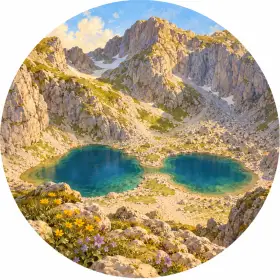
Below the summit of Mount Vettore, at almost two thousand metres, lies a small lake, the Lago di Pilato (Pilate's Lake), that in summer splits in two and looks like a pair of glasses. The legend tells that the body of Pontius Pilate, condemned by the emperor, was put on a cart pulled by two buffaloes. The animals carried it from Rome all the way to the Sibillini mountains and plunged the cart into that very lake. In the Middle Ages people believed demons lived in the lake, and sorcerers and necromancers climbed up there to consecrate magic books.
Did you know? The lake is home to a little red shrimp, Marchesoni's fairy shrimp, which exists nowhere else on Earth.
Sources: Montagna.tv, «Bentornati occhiali: lo spettacolo del lago di Pilato»; Antoine de la Sale, «Le paradis de la reine Sibylle» (1420)
La Santa Casa di Loreto
the Holy House, carried through the air · Marche
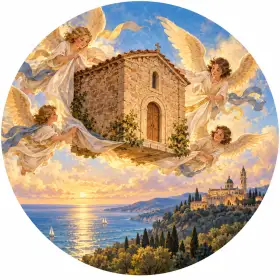
Inside the great basilica of Loreto there is a small stone house, the Santa Casa (the Holy House). Tradition says it is the house in Nazareth where Mary lived, and that angels carried it through the air across the sea: first to Illyria, on the other side of the Adriatic, then to the lands of Recanati, until they set it down on the hill of Loreto on the night between 9 and 10 December 1294. Some scholars think the stones arrived by ship, carried by Christians of the age of the Crusades. The two explanations have lived side by side for centuries.
Did you know? On the night of 9 December the Marche light the “fires of the Coming”, bonfires that according to tradition light the way for the flying house.
Sources: Patriarcato di Venezia, «La Santa Casa di Loreto»; Santuario della Santa Casa di Loreto, Delegazione Pontificia, «La Santa Casa da Nazareth a Loreto»
The Fairies of Mount Sibilla
the Sibyl's handmaidens · Marche
The fairies were the Sibyl's handmaidens and lived with her in the cave at the top of the mountains. At night they came down to the villages, especially Pretare, to dance with the shepherds and the local young people, but they had to be home before dawn. The story goes that a curious shepherd discovered their secret: under their long skirts they had goat's legs. One night they stayed too late and ran off so fast that they left their footprints on the side of Mount Vettore, the highest peak in the Marche: ever since, that road has been called the “Fairies' Road”.
Did you know? Every August in Pretare a theatre performance, “The Descent of the Fairies”, tells this story.
Sources: ENIT, italia.it, «Pretare»; Antoine de la Sale, «Le paradis de la reine Sibylle» (1420)